
Running a small or medium-sized business often feels like navigating uncharted waters. Many SMB owners rely on gut instincts and experience to guide their decisions. While intuition has its place, the most successful businesses today are those that learn how to make data-backed decisions alongside their entrepreneurial instincts.
Data-driven decision making represents a fundamental shift from reactive management to strategic planning based on concrete evidence and measurable insights.
Why Data-Driven Decisions Matter for Small Business Success
Small businesses face unique challenges that make every decision critical.
Unlike large corporations with room for error, SMBs must maximize every dollar spent and opportunity pursued. Yes, small businesses can also act swiftly, but wrong actions cost more in the big picture since it can be dangerous for the business.
This is where business analytics for SMBs becomes not just helpful, but essential for survival and growth.
Data-driven decision making offers small businesses several key advantages:
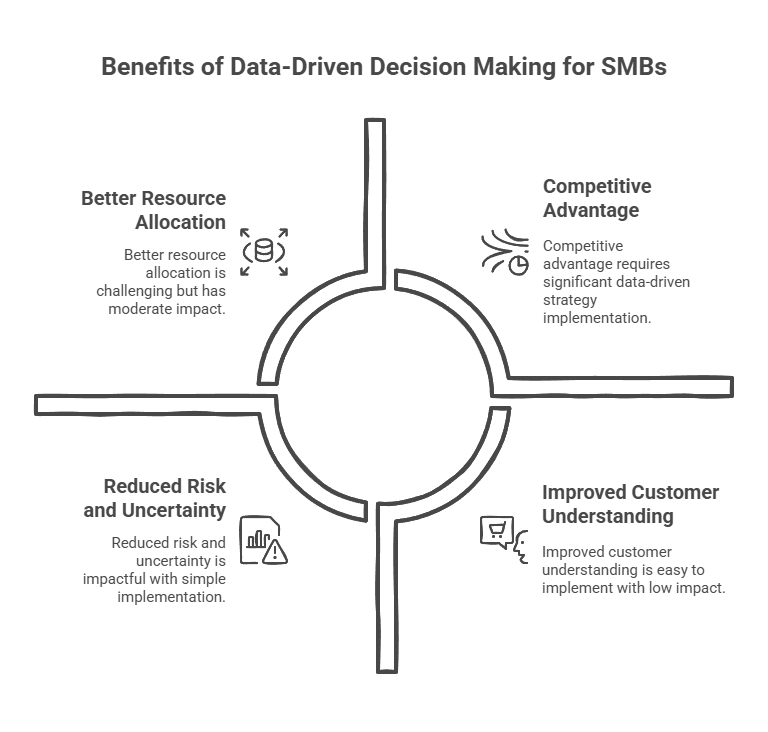
Reduced Risk and Uncertainty: Instead of guessing what customers want or which marketing channels work best, you can analyze actual performance data to identify patterns and trends. This approach significantly reduces the risk of costly mistakes that could impact your bottom line.
Improved Customer Understanding: Small business data analysis reveals valuable insights about customer behavior, preferences, and buying patterns. This knowledge allows you to tailor your products, services, and marketing efforts to better meet customer needs.
Competitive Advantage: Many SMBs still operate on assumptions rather than facts. By embracing data-driven approaches, you gain a significant edge over competitors who rely solely on guesswork.
Better Resource Allocation: With limited budgets and resources, knowing exactly where to invest your time and money becomes crucial. Data helps you identify which activities generate the highest return on investment.
The Current State of Decision Making in Small Businesses
Most SMBs operate with limited resources and tight timelines, making quick decisions based on available information and past experience.
This approach works in stable environments but becomes problematic when market conditions change rapidly or competition intensifies.
Analytics can bridge this gap for small businesses by providing objective insights that complement managerial experience.
Traditional decision-making patterns in SMBs typically involve reviewing financial statements, consulting with key team members, and applying lessons learned from previous situations.
However, this approach often misses subtle patterns, emerging trends, and correlation opportunities that data analysis can reveal.
What is Data-Driven Decision Making for SMBs?
Data-driven decision making involves collecting relevant information, analyzing patterns and trends, and using these insights to guide strategic choices.
For small businesses, this doesn’t require expensive enterprise software or dedicated data science teams. Instead, it means systematically gathering information about customers, operations, and market performance to inform business decisions.
The foundation of effective small business analytics rests on identifying key performance indicators that directly impact business outcomes.
These metrics might include customer acquisition costs, lifetime value calculations, inventory turnover rates, or seasonal demand patterns.
The goal is creating a framework where decisions are supported by quantifiable evidence rather than assumptions.
What are the Common Challenges SMBs Face with Data? And What are the Solutions?
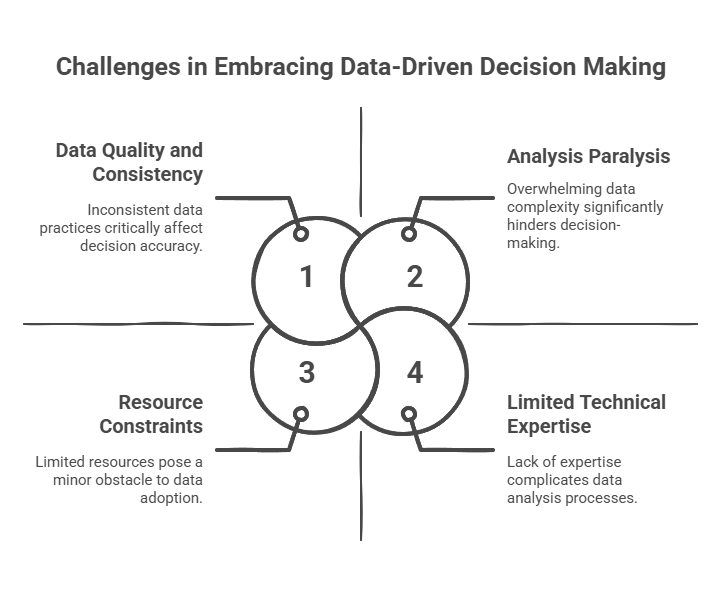
Despite the clear benefits, many small business owners hesitate to embrace data-driven decision making. Understanding these challenges is the first step toward overcoming them:
Data Quality and Consistency
SMBs often struggle with inconsistent data collection practices or incomplete information.
Address this by establishing clear definitions for key metrics and implementing consistent measurement procedures across all business functions.
Analysis Paralysis
Modern businesses generate vast amounts of data from websites, social media, sales systems, and customer interactions.
Too much data can overwhelm decision-makers and slow down business operations. Focus on a limited set of critical metrics that directly relate to business objectives.
Small business analytics should enhance decision-making speed, not hinder it.
Resource Constraints
Limited time and budget concerns are legitimate barriers for many SMBs.
Start with simple analyses using existing tools and data sources.
As the value becomes apparent, gradually expand analytical capabilities and invest in more sophisticated approaches.
Limited Technical Expertise
Many SMB owners lack formal training in data analysis. The thought of interpreting spreadsheets, creating reports, or using analytics tools can seem daunting.
How to Build a Data-Driven Culture?
Transitioning to data-driven decision making requires more than implementing new tools or processes. It involves changing organizational culture to value evidence-based reasoning and systematic analysis.
This cultural shift happens gradually as team members see the benefits of data-supported decisions.
Training employees to understand and use basic analytical concepts helps build organization-wide capabilities.
When multiple team members can contribute to data collection and analysis efforts, the quality and comprehensiveness of insights improve significantly.
How to Build Your Data Analysis Capabilities?
Just like many other aspects of any business, you have two big paths to choose. You can either do it yourself or pay for it. As your data grows, you can gradually expand your analytical capabilities:
Invest in Training: Online courses, webinars, and workshops can build your team’s data literacy. Many universities and business organizations offer affordable programs specifically designed for small business owners.
Consider External Help: Hiring a part-time data analyst or consulting with specialists can provide expertise without the full-time employee cost. Many analysts offer flexible arrangements perfect for SMBs.
But before doing this, you should have data. How do we get data?
How to Start Your Data Journey?
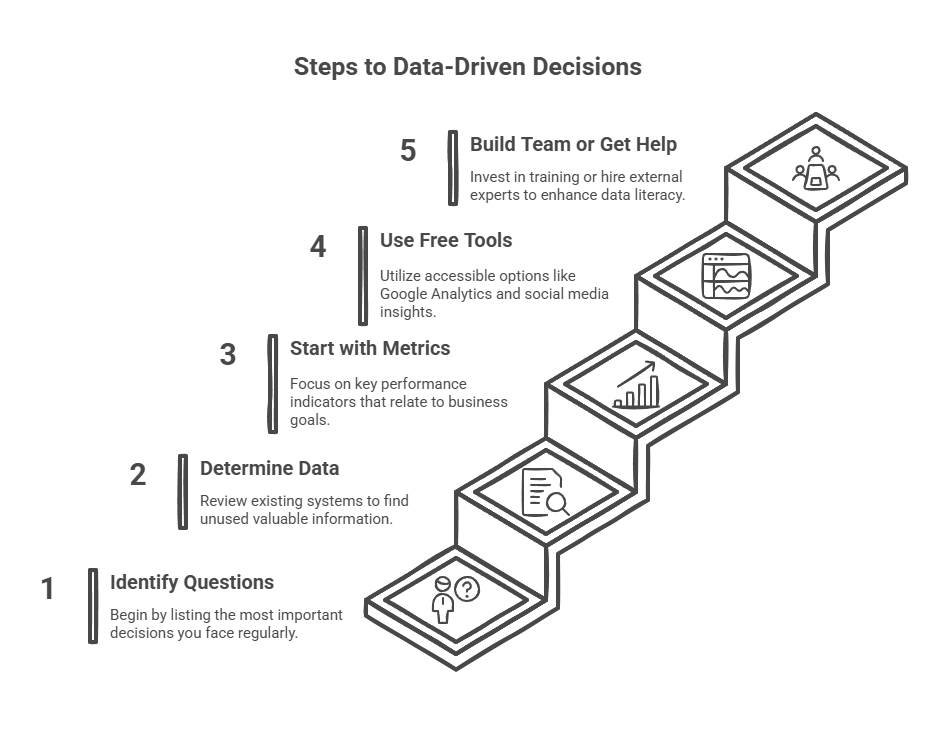
The transition from gut feeling to data-backed decisions doesn’t happen overnight, but you can start with simple steps that deliver immediate value:
Step 1: Identify Your Key Questions
Begin by listing the most important decisions you face regularly.
These might include questions like:
- Which products should I stock more of?
- What marketing channels bring in the best customers?
- When should I hire additional staff?
- What prices should I charge?
Step 2: Determine What Data You Already Have
Most SMBs collect more data than they realize. Review your existing systems including point-of-sale software, website analytics, social media insights, customer feedback, and financial records.
You likely have valuable information sitting unused in these systems.
Step 3: Start with Simple Metrics
Focus on a few key performance indicators that directly relate to your business goals.
For retail businesses, this might include sales per square foot, customer acquisition cost, and inventory turnover.
Service businesses might track client retention rates, project profitability, and lead conversion rates.
Step 4: Use Free and Low-Cost Tools
Google Analytics provides detailed website traffic and customer behavior data at no cost.
Social media platforms offer built-in analytics tools.
Many accounting software packages include basic reporting features.
Start with these accessible options before investing in more sophisticated tools.
Step 5: Build your own team or get external help
Investing in employee training through online courses, webinars, and workshops is a practical way to enhance your team’s data literacy, with many reputable universities and business organizations offering cost-effective programs tailored for small business needs.
In addition, seeking external support such as hiring a part-time data analyst or engaging with consultants can bring valuable expertise without incurring the expense of a full-time hire.
You can contact OBK Consultancy for these types of services.
Measuring Success and Continuous Improvement
Effective small business analytics includes mechanisms for evaluating the success of data-driven decisions.
This creates a feedback loop where analytical approaches can be refined and improved over time.
Track both the accuracy of predictions and the business impact of decisions made using data analysis.
Document specific decisions made using data and their results to build confidence in your analytical approach.
Regular review of analytical processes helps identify areas for improvement and ensures that measurement activities remain aligned with business objectives. As businesses grow and evolve, their analytical needs will change accordingly.
Moving Forward: How to Make Data Part of Your Culture?
Successfully transitioning to data-backed decisions requires more than just tools and techniques and it doesn’t happen overnight. It involves creating a culture where data informs discussions and decisions at every level of your organization.
Small business analytics provides the foundation for scaling operations, optimizing resource allocation, and identifying growth opportunities that might otherwise remain hidden.
The key is starting with simple, practical approaches and building analytical capabilities gradually as experience and confidence grow.
You can start by leading. When presenting ideas or making recommendations, support your points with relevant data. Encourage team members to back up their suggestions with facts and figures. Celebrate successes that result from data-driven decisions to reinforce their value.
Remember that data should enhance, not replace, your business intuition. The most effective SMB leaders combine analytical insights with their deep understanding of their industry, customers, and market conditions.
By combining entrepreneurial instincts with systematic data analysis, small and medium-sized businesses can make more informed decisions while maintaining the agility and responsiveness that characterize successful SMB operations.
The future belongs to businesses that can balance speed with accuracy, and data-driven decision making provides the framework for achieving this balance.
Conclusion
Start small, focus on the data that matters most to your specific business goals, and gradually build your capabilities over time. With patience and persistence, you’ll develop the skills and systems needed to make confident, data-driven decisions that propel your business forward.
While the transition requires effort and commitment, the benefits far outweigh the challenges. SMBs that embrace business analytics for SMBs position themselves for sustainable growth and long-term success.
The competitive landscape continues to evolve, and businesses that can effectively harness their data will have a significant advantage.
Don’t let another quarter pass by relying solely on intuition when the tools and techniques for data-driven success are within your reach.
Not sure where to start with your data? OBK Consultancy is here to help. Reach out today.
 OBK Consultancy